


Nursing Burnout in Australia: Why Nurses Are Burning Out and What Can Help
19 Aug 2026
Nurse burnout is a growing and well-documented issue in Australia. Recent workforce data found that roughly 33% of Australian nurses report experiencing severe, high-frequency stress, while up to 74% report dealing with chronic emotional exhaustion from their work cycles. These figures highlight the ongoing impact of workload, staffing pressures, and emotional demands on nurses, healthcare teams, and patient care.
Nurse Burnout Statistics in Australia
Here are the important stats that show how serious nurse burnout in Australia is:
- The Australian Primary Health Care Nurses Association's national Workforce Survey found that three-quarters of nurses working in primary health care feel stressed and exhausted at work, and one in four plan to leave their jobs within the next two to five years.
- Nursing is Australia's largest health profession. Australian nurses are more than 40% of the health workforce. However, the Department of Health, Disability and Ageing warns that without reform, Australia could face a shortfall of around 79,000 nurses by 2035.
- A national modelling study behind that strategy projected an undersupply of roughly 70,700 full-time equivalent nurses by 2035, with the biggest gaps expected in acute care, primary health care, and aged care.
These numbers matter because nurse burnout and nurse shortages feed each other. When nurses leave, the pressure on those who stay increases, which eventually results in more burnout and more turnover.
What Is Nursing Burnout?
The World Health Organisation describes burnout as a syndrome caused by long-term workplace stress that hasn't been managed well. It shows up in three ways: feeling emotionally worn out, becoming distant or cynical about the job, and feeling like your work doesn't count for much anymore.
Nurse burnout is not just a personal struggle; it is a workforce issue that can affect nurses’ well-being, patient care, and the strength of the healthcare system.
It doesn't appear overnight. It builds slowly, shift by shift, until someone who used to love patient care starts dreading the drive to work.
Stress, Burnout, and Compassion Fatigue: What's the Difference?
People often use these words interchangeably. However, they're not the same.
- Work-related stress is short-term and usually eases as the time or event passes. For example, an interaction with a difficult or rough patient, long and tough shift.
- Burnout builds over time, from ongoing unresolved stress, wearing down energy, motivation, and outlook over weeks or months.
- Compassion fatigue is the emotional or physical exhaustion that progresses with time. It is the emotional cost of caring for suffering or dying patients, over and over, without time to process it. It can happen even to nurses who still love their job and have genuine compassion for serving patients.
The solution differs for each issue. Stress might ease with better workload management and rostering. Compassion fatigue often needs debriefing. Burnout usually needs both personal coping and workplace-level change.
Reasons for Nurse Burnout
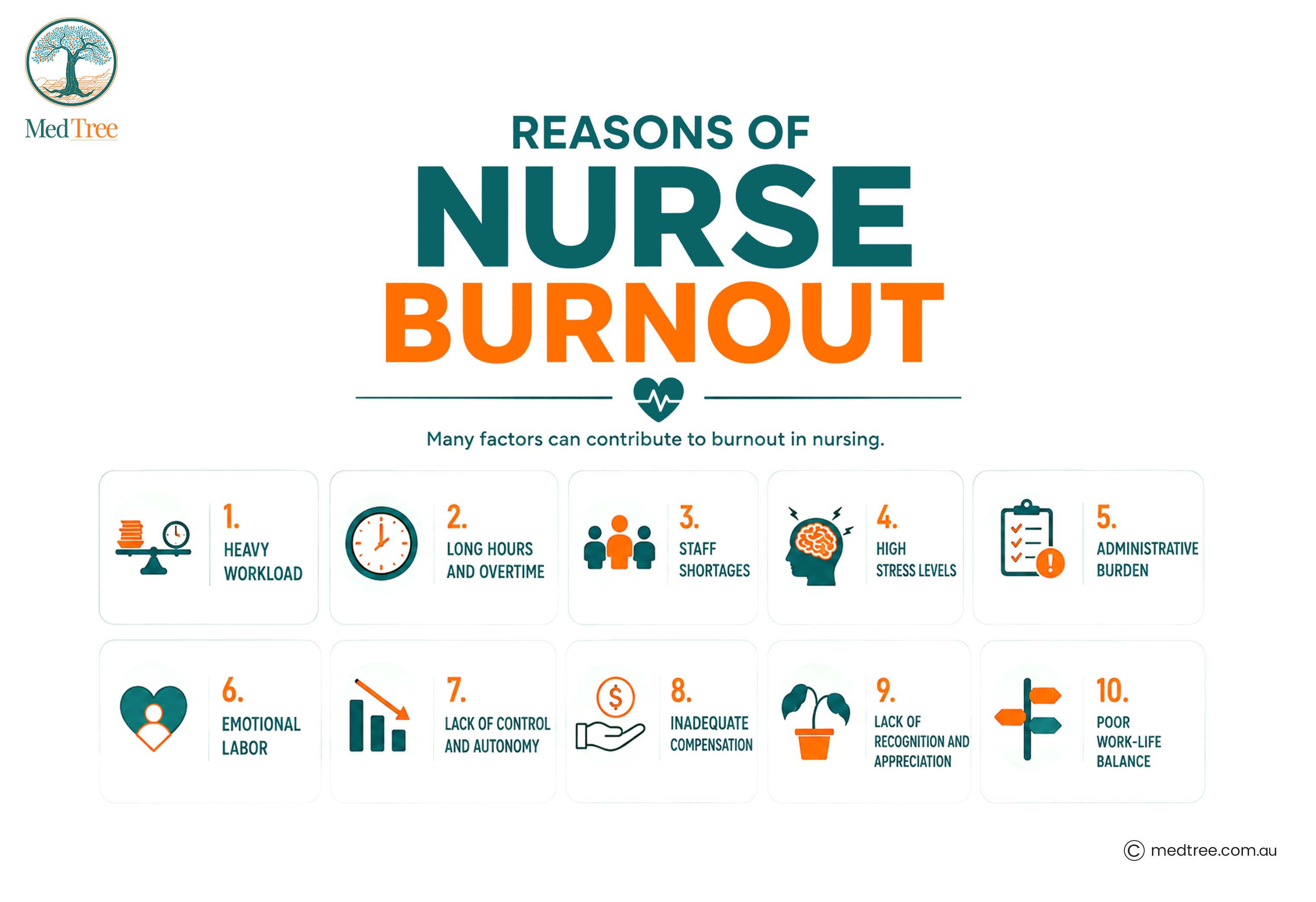
Burnout rarely has one single cause. It usually builds from several pressures stacking on top of each other:
- Heavy workloads in understaffed wards
- High patient load that puts excessive pressure on nurses
- Perfectionism means high work performance expectations from nurses
- Ongoing workforce shortages, which could leave Australia short of more than 70,000 nurses by 2035 without further reform
- Long or irregular shifts, including night duty and rotating rosters that disrupt sleep
- Emotional demands of caring for critically unwell or dying patients, often with little downtime
- Healthcare workplace culture problems, e.g. poor or, in some cases, lack of communication or feeling unable to speak up
- Limited control over rosters, workload, or day-to-day decisions
- Not feeling supported by management, especially when raising concerns doesn't lead to change
Signs and Symptoms of Nurse Burnout
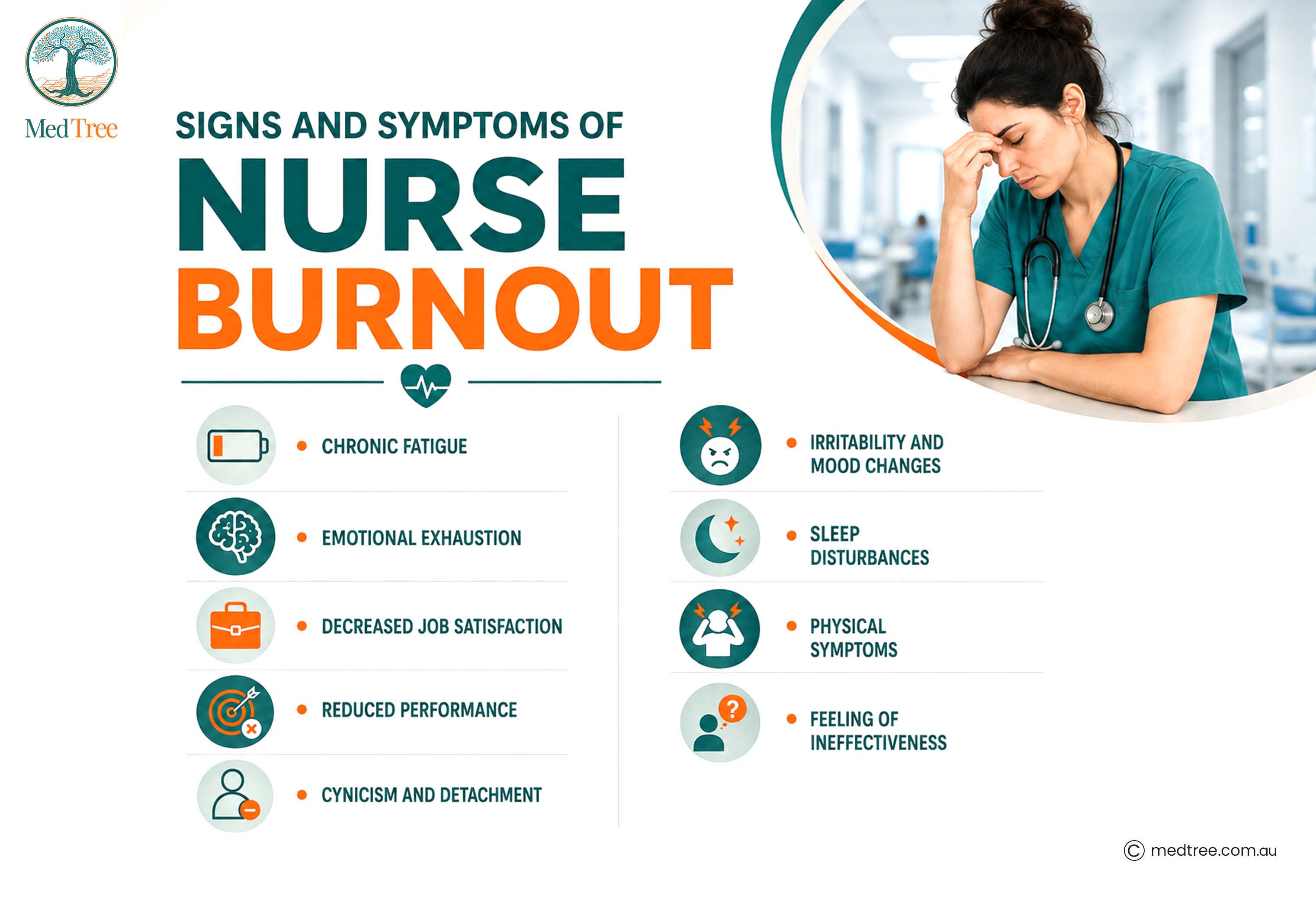
Burnout doesn't look the same for everyone, but common signs include:
- Feeling tired every time, even when getting enough sleep and break time
- Exhaustion that doesn't improve with a day off
- Growing cynicism or feeling emotionally flat around patients
- Dreading shifts or calling in sick more often
- Trouble concentrating, or more near-misses and errors
- Pulling away from colleagues
- Physical symptoms such as headaches, poor sleep(trouble falling asleep), or getting sick more often
These signs and symptoms can develop into anxiety, low mood, or a decision to leave nursing altogether if they are left unchecked.
The Impact of Nursing Burnout
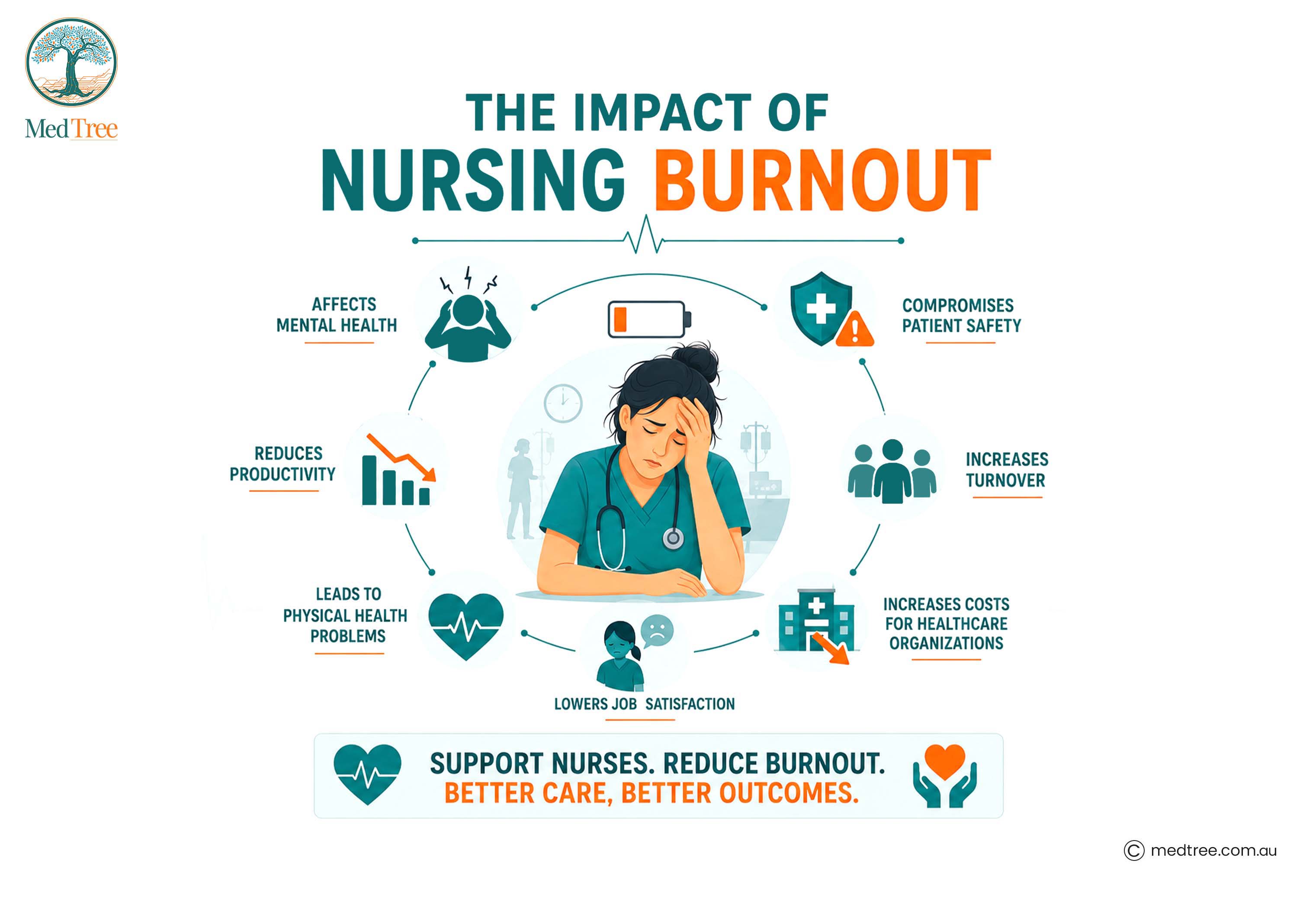
Burnout doesn't just affect how a nurse feels; it affects the care patients receive. According to Research, nurse burnout results in more clinical errors, lower quality of care, and reduced patient safety. Burnout can also lead nurses to leave their jobs, putting more pressure on already busy teams and increasing recruitment and training costs. For nurses, ongoing burnout can affect mental wellbeing, disrupt sleep, and make them more likely to leave the profession.
How to Prevent Nurse Burnout in Australia?
Because burnout is a workplace problem, it needs a workplace-level response, not just personal coping. Self-care genuinely helps, but expecting nurses to manage unsafe staffing through better sleep habits alone isn't a solution. Real prevention needs both individual strategies and organisational change together.
What Healthcare Organisations Can Do
- Maintain safe, realistic nurse-to-patient ratios
- Involve nurses in decisions about rosters and workflow
- Make mental health support easy to access, without stigma
- Train managers to check in genuinely, not just tick a box
- Reduce unnecessary paperwork where possible
- Build a culture where raising concerns actually leads to change
7 Tips for Preventing Nurse Burnout in Healthcare
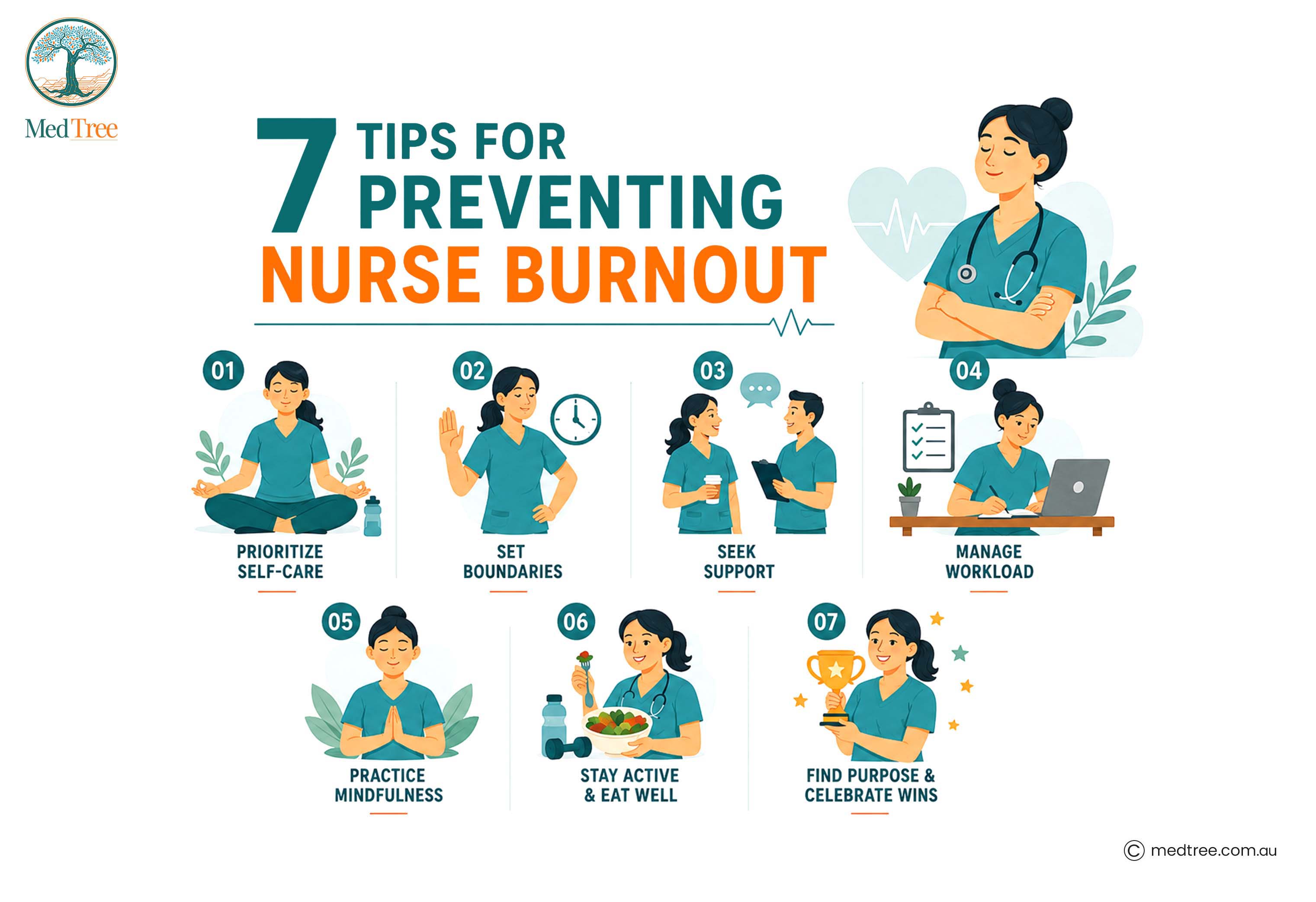
Here are seven practical tips for burnout nurses.
- Take your actual breaks. Don’t ignore the importance of little breaks. Even ten minutes off the floor helps you reset during a shift.
- Lean on your colleagues who care and listen to you. Talking with peers who understand the work eases the emotional load of carrying it alone.
- Protect your days off. Try not to let overtime become the default when a ward is short-staffed.
- Prioritise sleep, especially around night shifts and rotating rosters. Recovery time isn't optional.
- Debrief after hard shifts. Talking through a difficult case, formally or informally, stops it from building up.
- Speak up collectively. Raising staffing concerns through your union or team meetings carries more weight than going it alone.
- Get support early, through an employee assistance program, a GP, or a mental health professional. Don't wait until you're at breaking point.
These tips support resilience, but they work best alongside genuine organisational change, not as a replacement for it.
Frequently Asked Questions
What is the main cause of nurse burnout in Australia?
There is not a single cause of nursing burnout in Australia. However, heavy workloads, workforce shortages, and limited control over rosters are the most common causes of burnout in nursing in Australia.
How is burnout different from compassion fatigue?
Burnout comes from chronic workplace stress generally. On the other hand, compassion fatigue is specifically related to repeated exposure to patients' suffering. They often occur together, but they aren't the same thing.
Can nurses recover from burnout?
Yes, nurses can recover from burnout. However, recovery usually depends on more than personal effort. It is a combination of early recognition, easy access to support, and genuine changes to workload or environment.
Why does nurse burnout matter for patient care, not just nurses?
It matters because nurse burnout can lead to poor patient care. Also, research links burnout with higher error rates and reduced quality of care, making it a patient safety issue as much as a workforce wellbeing one.
Find Support on MedTree Community
Burnout is harder to carry alone. MedTree connects nurses and healthcare professionals across Australia to share real experiences, swap practical strategies, and access professional resources, because no one should have to manage this in isolation. Join the conversation on MedTree Community today.
Disclaimer: This article is for general information only and is not a substitute for professional advice. If burnout is affecting your wellbeing or work, consider speaking with a qualified healthcare professional.
References:
- World Health Organisation (WHO). Burn-out as an occupational phenomenon.
- Australian Primary Health Care Nurses Association (APNA). Workforce Survey findings.
- Australian Government Department of Health. Nursing Supply and Demand Study 2023–2035.
- Li LZ, et al. Nurse Burnout and Patient Safety, Satisfaction, and Quality of Care. JAMA Network Open. 2024.