


Ageing Population in Australia: Causes, Impacts & Challenges
10 Jun 2026
Australia is getting older, and not just in years. The country's demographic makeup is shifting in ways that will reshape everything from healthcare to the economy over the coming decades.
If you've ever wondered, does Australia have an ageing population? The short answer is yes, and it's one of the most important social issues of our time.
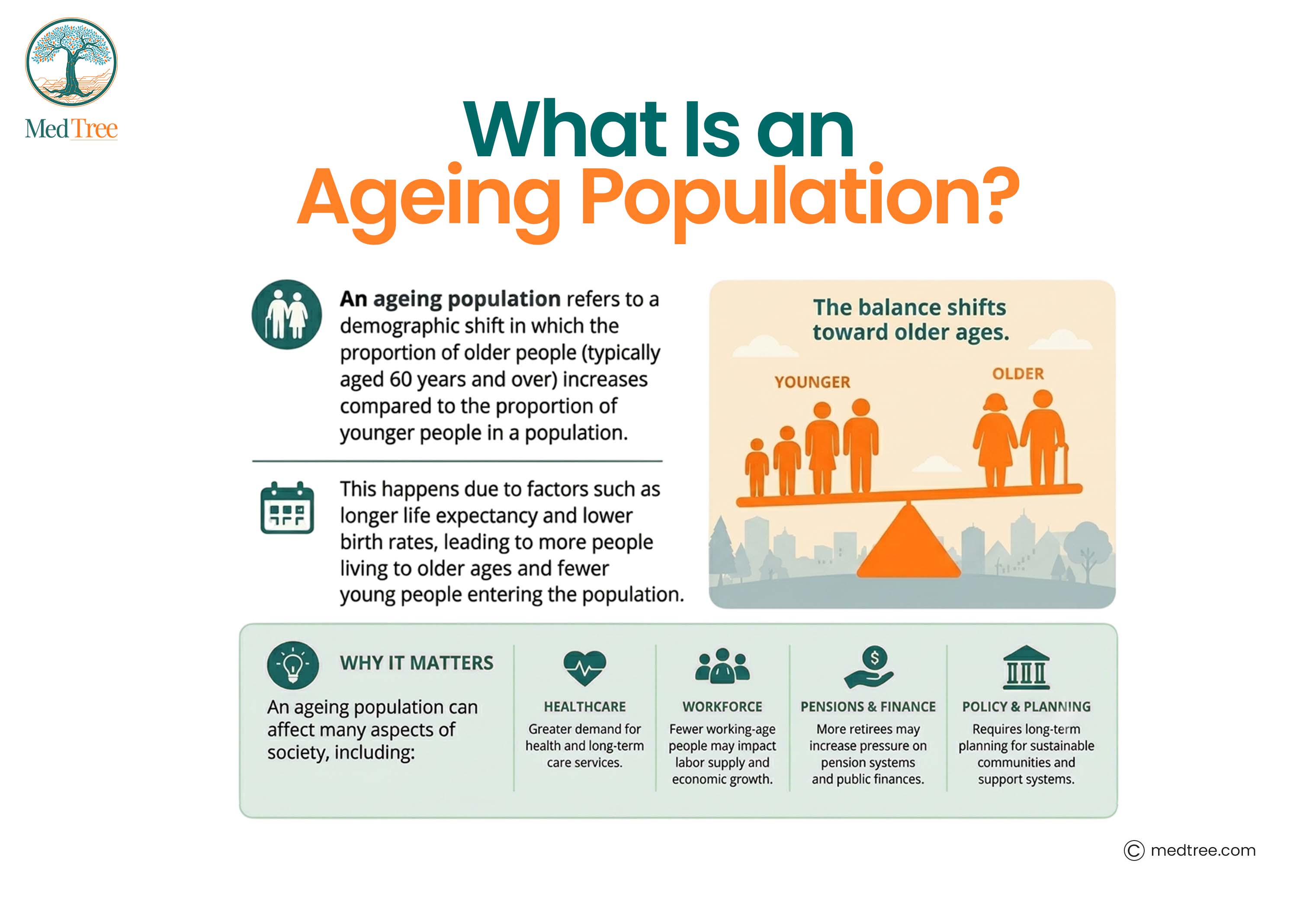
What Is an Ageing Population?
The meaning of an ageing population is simple. It refers to a rise in the median age of a country's people. It means birth rates are falling and lifespans are increasing. In practical terms, the share of older people grows while the proportion of younger and working-age people shrinks.
So, what is ageing population in Australia specifically? It means that Australians aged 65 and over are making up a larger part of the total population each year. When older adults become a large part of any country, the pressure on services, systems, and government budgets increases.
An Overview of Australia's Ageing Population
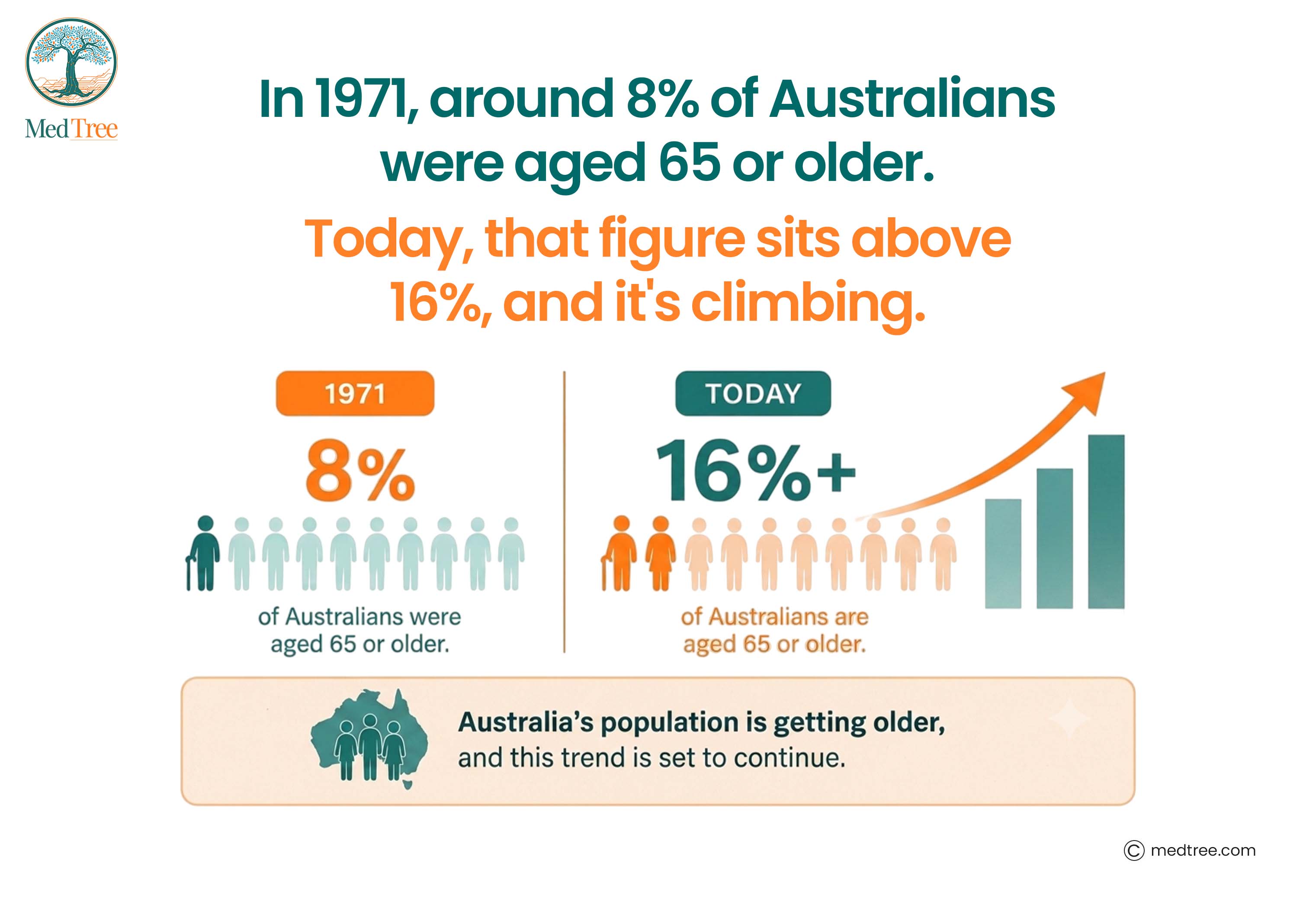
Australia is unquestionably an ageing population nation. According to the Australian Bureau of Statistics (ABS), Australia's population by age has shifted dramatically.
In 1971, around 8% of Australians were aged 65 or older. Today, that figure sits above 16%, and it's climbing.
When you look at the age distribution in Australia, the picture becomes clearer. Baby boomers, those born between 1946 and 1964, are now of retirement age. On the other hand, due to a decline in birth rates resulting in fewer young people in the population, that balances things out.
The working age population (typically 15–64 years) is still the largest group. But its share is slowly declining. Meanwhile, the elderly population in Australia is expanding faster than any other age group. This imbalance is at the heart of the ageing problem.
What's Causing Australia's Ageing Population?
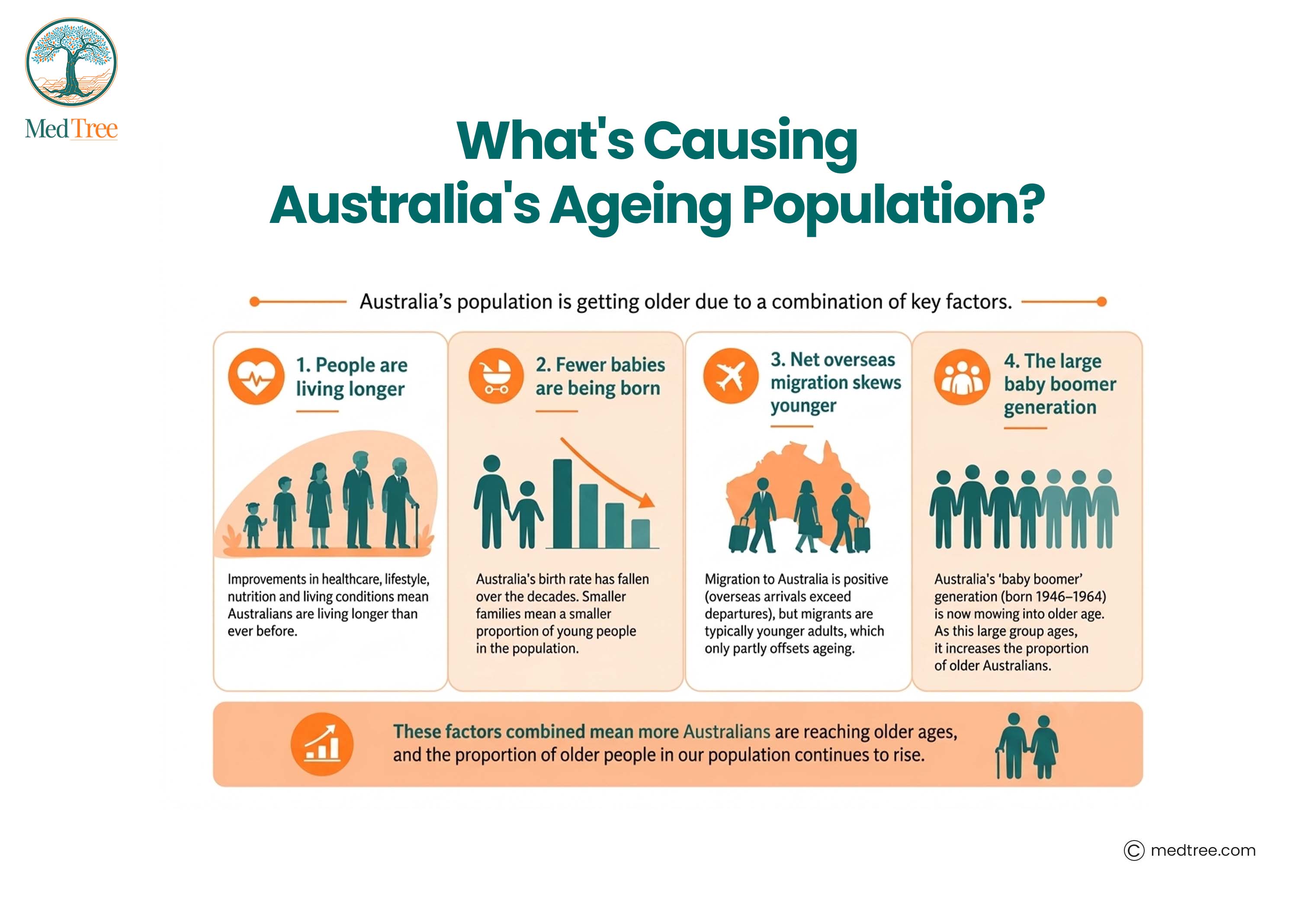
Several factors are driving ageing in Australia. The causes are:
Lower Birth Rates
Australia's total fertility rate has been below the replacement level of 2.1 for decades. Couples are having fewer children or none at all. The reasons for low birth rates include rising living costs, career priorities, and shifting social norms.
Higher Life Expectancy
Australians are living longer than ever. Life expectancy at birth now sits around 83–85 years. More people surviving into their 70s, 80s, and beyond are naturally increasing the proportion of older citizens.
Better Healthcare
One of the main causes of the ageing population in Australia is better healthcare. Australians now have better access to advanced medicine and improved public health infrastructure. In addition, chronic disease management has improved a lot. Australian people are living longer with manageable health conditions.
Migration Trends
Australia has long relied on skilled migration to support population growth. However, most migrants arrive as working-age adults and they, too, will age. Migration provides short-term relief but doesn't fully offset long-term demographic ageing.
Impact of Ageing Population in Australia
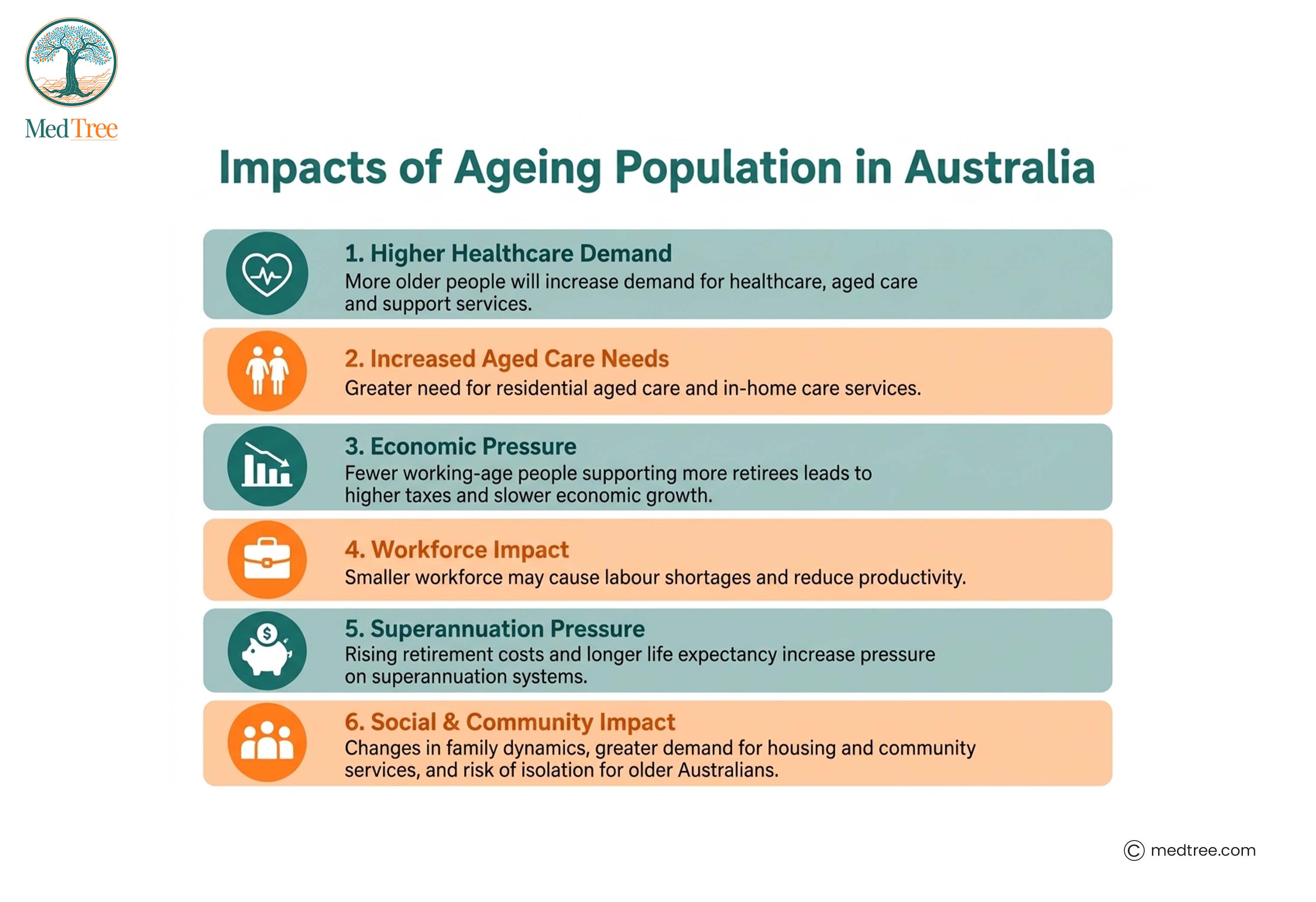
The impact of ageing population in Australia touches nearly every part of society. Here's how:
Economic Pressure
Fewer workers supporting more retirees means reduced tax revenue and higher government spending. The Australian ageing population problem is important here, as pension costs, aged care funding, and healthcare expenditure will rise exponentially.
Healthcare System Strain
Older Australians use more health services. Rising healthcare needs are already putting pressure on hospitals, GPs, and specialists.
With the elderly population growing, demand for aged care beds, home care packages, and dementia services will also rise.
Workforce Shortages
As baby boomers retire, industries face skills gaps. Some sectors, such as nursing, aged care, and construction, are already struggling to find workers. The shrinking working-age population makes this worse.
Pension and Social Security Challenges
Current taxpayers fund the Age Pension. Fewer workers paying into the system while more people draw from it creates a sustainability problem that governments are working to address.
5 Major Key Challenges for the Ageing Population in Australia
The 5 major risk areas for the ageing population in Australia are:
- Health and chronic disease: Conditions like dementia, diabetes, and heart disease become more prevalent with age, which will put huge pressure on the healthcare system.
- Financial insecurity: Many older Australians, particularly women, retire with inadequate superannuation savings, risking poverty in old age.
- Social isolation and mental health: Loneliness among the elderly is a serious but underreported crisis. This will lead to cognitive decline and depression in older people.
- Housing affordability: Older Australians on fixed incomes struggle in an expensive housing market, with many at risk of homelessness.
- Aged care quality: The 2021 Royal Commission into Aged Care Quality and Safety exposed serious systemic failures in how Australia cares for its oldest citizens.
Ageing population Australia health issues also include falls and injury management, polypharmacy (managing multiple medications), and access to mental health services in rural and remote areas.
How Is Australia Adapting?
What age group has the highest population in Australia right now? The 35–44 age bracket currently represents one of Australia's largest age groups. But within two decades, the 65+ group will overtake it in terms of its proportional weight in the system.
Australia isn't standing still. Governments are investing in home care to keep older people out of hospitals and aged care facilities. The superannuation system is being strengthened to ensure more Australians retire with adequate savings. Immigration policy continues to prioritise younger and skilled workers to bolster the workforce.
There's also growing interest in flexible work arrangements to keep older Australians employed longer, a practical response that benefits both individuals and the economy.
Conclusion
The ageing population in Australia is not a future problem; it is happening now. Falling birth rates, longer lifespans, and a retiring baby boomer generation are reshaping the country's demographic profile. The challenges are real as healthcare pressure, workforce gaps, pension sustainability, and aged care quality all demand urgent attention.
Understanding what an ageing population is and why it matters is the first step. Addressing it requires long-term planning, policy reform, and a genuine commitment to valuing older Australians not just as a demographic challenge to manage, but as people who deserve dignity, security, and good care.
Australia has the tools and the talent to get this right. Whether it has the will remains to be seen.
Disclaimer: This article is intended for informational purposes only and should not be considered a substitute for official information, medical advice, or other professional guidance.