


How to Use an Opioid Conversion Calculator Safely in Clinical Practice?
28 Jul 2026
An opioid conversion calculator helps clinicians estimate an equivalent dose when switching a patient from one opioid to another or changing the route of administration. The calculated result is only an estimate and should always be interpreted alongside clinical judgment.
Opioid conversion may be required for reasons ranging from inadequate analgesia to intolerable adverse effects. While these calculators can support clinical reasoning, the resulting figure is an estimate only and does not replace clinical judgment or comprehensive patient assessment.

What Is an Opioid Conversion Calculator?
An opioid conversion calculator is sometimes referred to as a morphine equivalent calculator or MME calculator. It helps clinicians estimate the equianalgesic dose of a new opioid based on a patient's current opioid regimen. This is distinct from an oxycodone-specific comparison, as the intent here is dose estimation across a class of medicines rather than a single-agent comparison.
These tools are commonly used in several clinical situations, including:
- Opioid rotation due to poor response or tolerability
- Changing the route of administration (for example, oral to subcutaneous)
- Managing adverse effects such as sedation or nausea
- Addressing inadequate analgesia despite dose titration
An opioid dose calculator or opioid equivalency calculator may assist clinicians when reviewing breakthrough opioid requirements as part of the overall opioid regimen. These tools draw on published equianalgesic ratios, but ratios vary between resources, and figures should always be cross-checked against current, guideline-aligned references such as Therapeutic Guidelines or eviQ before being applied in practice.
How to Use an Opioid Conversion Calculator Safely?
Using an opioid conversion chart calculator safely involves a structured process:
- Confirm the patient's total daily opioid dose, including all regular and breakthrough doses.
- Select the current and intended opioid, ensuring the correct agent and formulation are entered.
- Verify the route of administration, as this significantly affects equianalgesic ratios.
- Treat the calculated dose as an estimate only, not a final prescribing decision.
- Consider incomplete cross-tolerance. Tolerance to one opioid does not fully transfer to another, so the calculated dose may require downward adjustment based on individual circumstances.
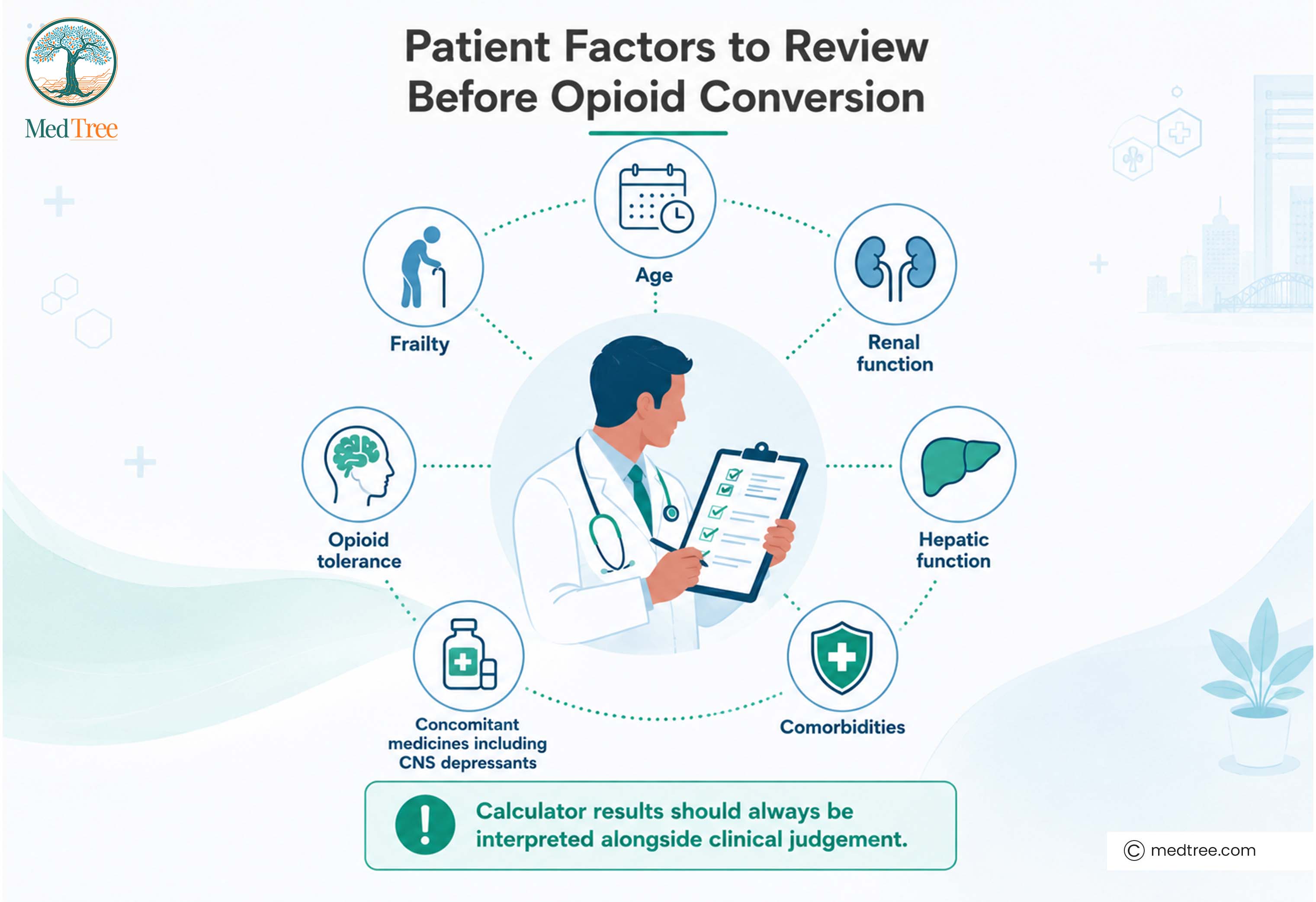
- Review patient-specific factors, including age, frailty, renal function, hepatic function, opioid tolerance, comorbidities, and concomitant medicines that may affect opioid selection and dosing, such as sedatives or other central nervous system depressants.
- Monitor closely after conversion. Reassess analgesia, sedation, respiratory status, and adverse effects, particularly within the first 24 to 48 hours.
A buprenorphine to morphine conversion, for instance, may require additional caution due to buprenorphine's high receptor affinity and partial agonist activity and should be assessed according to individual patient factors rather than calculator output alone. Where uncertainty remains, discussion with a pain specialist, palliative care physician, or pharmacist is a reasonable and often prudent step, particularly for complex or high-risk patients.
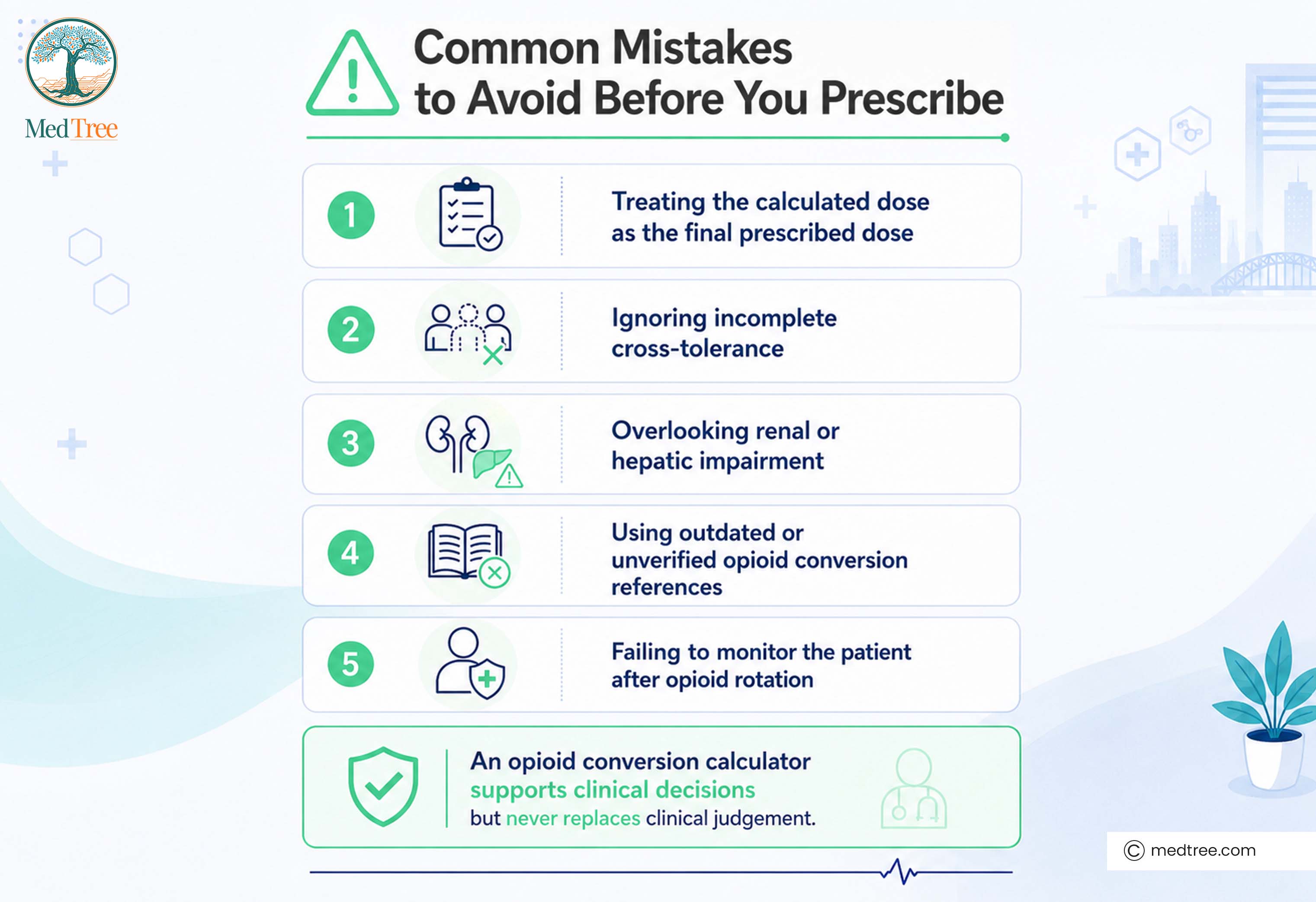
Common Mistakes to Avoid Before You Prescribe
- Treating the calculated dose as the final prescribed dose rather than a starting estimate
- Ignoring incomplete cross-tolerance when converting between opioids
- Overlooking renal or hepatic impairment, which can alter opioid metabolite accumulation
- Relying on outdated or unverified conversion resources instead of current, guideline-aligned tools
- Failing to monitor the patient adequately after opioid rotation
Conclusion
An opioid conversion calculator helps clinicians estimate an equivalent dose when switching from one opioid to another. Many also calculate morphine milligram equivalents (MME) to compare opioid exposure. However, safe opioid prescribing in Australia depends on more than calculator output. It requires thorough patient assessment, sound clinical judgment, and ongoing monitoring to ensure the final dose is appropriate for each individual.
This content is for educational purposes only and is not intended to replace professional medical advice, clinical judgment, or current prescribing guidelines.